• Each softgel delivers 500 mg of seal oil with EPA 30 mg, DHA 40 mg, and DPA 15 mg, providing a broad omega-3 profile with higher DPA content than many fish oils.
• DHA supports brain, eye, and nervous system development, making it a thoughtful choice for children and growing minds.
• The combination of EPA, DHA, and DPA helps support a healthy inflammatory response and cardiovascular wellness as part of a balanced diet.
• Comes in a 500-softgel bottle for long-term daily omega-3 supplementation.
Popular Searches
Top Brands
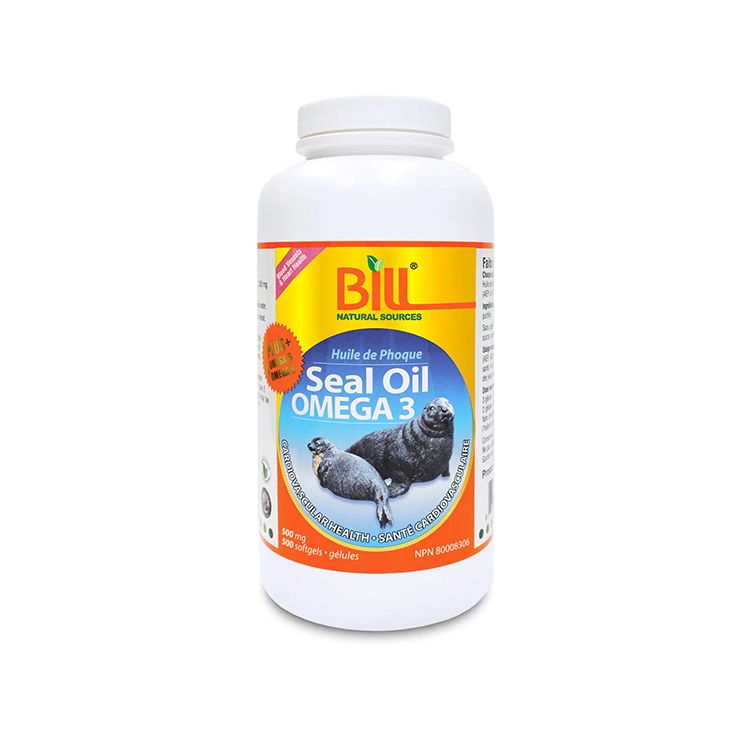
Bill Natural, Seal Oil Omega-3, 500mg, 500 Softgels
Size
500
softgels
UPC
878135001175
119 people have viewed this item in the last 7 days
About this item
Suggested Use
Adults: take 3 softgels, 3 times daily after meal. Adolescents and children are encouraged to take no more than 6 softgels per day after meal.
Ingredients
Each softgel contains:
Seal Oil (EPA 30mg, DHA 40 mg, DPA 15 mg)
500
mg
Non-medical Ingredients:
Gelatin, glycerin, purified water
Description
Omega-3 fatty acids are essential components that the human body cannot produce, and hence must be supplemented naturally. Seal oil is an excellent source of various Omega-3 essential fatty acids including Eicosapentaenoic Acid (EPA), Docosahexaenoic Acid (DHA), Docosapentaenoic Acid (DPA) and plays an important role in the development of the brain, eyes, and nervous system for children. EPA is a polyunsaturated fatty acid that is generally associated with lowering inflammation. DHA is a structural component of the brain, cerebral cortex, skin and retina. It is the most abundant omega-3 fatty acid in the brain and retina and plays a key role in the development of eye and nerve tissues. DPA is structurally similar to EPA and DHA and is associated with diverse nutritional and biological functions in the body. Seal oil is particularly rich in DPA compared to other marine oils.
*We are only able to ship this item to Canadian customers.
Frequently Asked Questions
What is Bill Natural Seal Oil 500mg and what is it used for?
Bill Natural Seal Oil 500 mg is a Canadian marine omega-3 supplement derived from harp seal oil, providing EPA, DHA, and DPA -- the complete omega-3 fatty acid triad -- in a smaller 500 mg softgel format. Each softgel provides EPA 30 mg, DHA 40 mg, and DPA 15 mg, with the full adult daily dose of 9 softgels (3 softgels, 3 times daily after meals) delivering EPA 270 mg, DHA 360 mg, and DPA 135 mg. The 500 mg format and large 500-softgel bottle provides an economical, flexible-dose option for the whole family, as the smaller capsule size is easier for children and individuals with swallowing difficulty.
What are the key ingredients in Bill Seal Oil 500mg and how does it differ from the 1000mg version?
Each 500 mg softgel provides seal oil 500 mg yielding EPA 30 mg, DHA 40 mg, and DPA 15 mg. The omega-3 fatty acid composition mirrors the Bill Seal Oil 1000 mg product (60 mg EPA, 80 mg DHA, 30 mg DPA per 1000 mg softgel) at exactly half the per-softgel dose and half the per-softgel price per unit. The key distinction between the two formats is practical rather than compositional: the 500 mg softgel is physically smaller and easier to swallow, making it suitable for children, older adults with dysphagia, or anyone who prefers smaller capsules. The 500-softgel bottle provides an extended supply at a cost-efficient price per milligram of omega-3. DPA (docosapentaenoic acid), present at meaningful concentrations in seal oil but absent or trace in fish oils, acts as a metabolic bridge between EPA and DHA and contributes to the complete omega-3 profile that distinguishes seal oil from conventional marine omega-3 supplements. Non-medicinal ingredients: gelatin, glycerin, purified water.
Who should use Bill Seal Oil 500mg and what is the dosage for different ages?
Bill Seal Oil 500 mg is suitable for the whole family due to its smaller capsule size and flexible dosing. Adults: 3 softgels, 3 times daily after meals (9 softgels total per day). Adolescents and children: up to 6 softgels per day after meals. For younger children who cannot swallow softgels, the capsule can be pierced and the oil squeezed into food or a beverage. The product is particularly suitable for: children needing omega-3 support for brain and eye development who cannot swallow the larger 1000 mg softgel; adults who prefer smaller capsules; households where multiple family members share the same supplement; and people seeking the complete EPA+DHA+DPA seal oil profile at a flexible dose. As with all omega-3 supplements, take with meals to minimize any digestive sensitivity and improve absorption. Consult a physician before use if taking anticoagulant medications. Not recommended during pregnancy without medical advice.
What distinguishes Bill Seal Oil 500mg from fish oil and why choose this format over the 1000mg version?
The compositional differentiation from fish oil is the same as the 1000 mg product: seal oil provides DPA (docosapentaenoic acid) at approximately 15-18% of total omega-3 content, compared to less than 1-3% in sardine, anchovy, and salmon oils. DPA is the metabolic intermediate between EPA and DHA in the body's omega-3 conversion pathway, can be retroconverted to EPA or elongated to DHA as physiological demand requires, and has demonstrated antiplatelet activity stronger than EPA in laboratory studies. No plant-based omega-3 source provides pre-formed DPA. The 500 mg format versus 1000 mg is a practical choice based on capsule swallowability: the 500 mg softgel is approximately half the size of the 1000 mg softgel, making it accessible to children from age 1 (with oil extracted) and to adults who have difficulty with large capsules. The 500-softgel bottle at the corresponding price provides the same cost per milligram of omega-3 as the 1000 mg product while offering greater flexibility. Bill is a Canadian brand and the product is sourced from Canadian harp seals under federal fisheries regulations, with Health Canada NHP authorization.
The information provided above is for reference purposes only and has not been reviewed or approved by Health Canada. It does not constitute medical advice and should not replace consultation with a qualified healthcare professional.
Caution
This product is not intended to diagnose, treat, cure, or prevent any disease.
Disclaimer
You should not use the information or services on this Site to diagnose or treat any health issues or for prescription of any medication or other treatment.
Always check the product label or packaging prior to using any product. If there are discrepancies, customers should follow the information provided on the product label or packaging.
Bill Natural, Seal Oil Omega-3, 500mg, 500 Softgels
Size
500
softgels
UPC
878135001175
119 people have viewed this item in the last 7 days
$28.99
Availability
Sorry, this item is out of stock
Related Products
-
-
-
$30.99
-
-
-
-
-