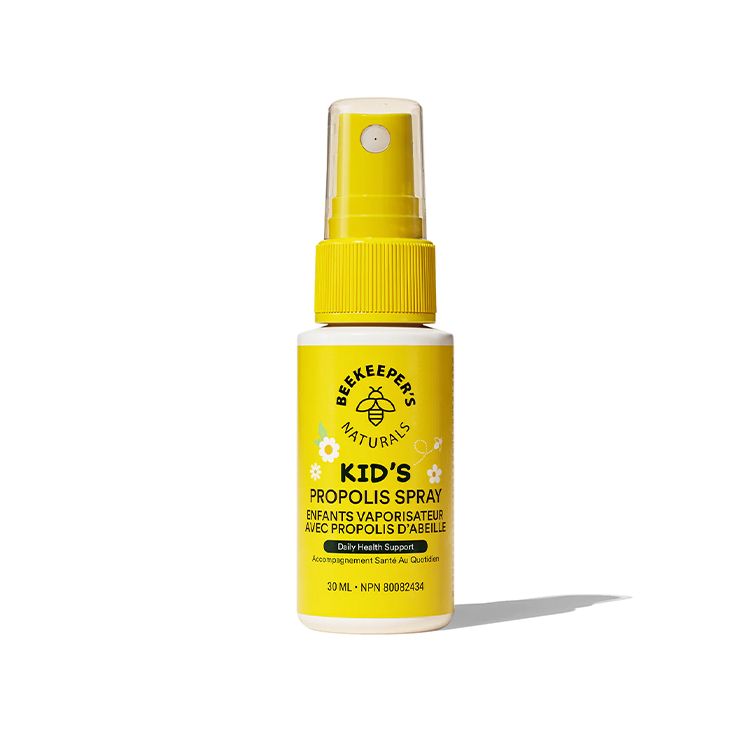
• From the hive, Beekeeper's Propolis Throat Relief for Kids supports immune defenses against germs while soothing sore throats.
• Naturally antiviral buckwheat honey delivers antioxidants to help daily wellness, in a gentle, sugar-free formula for kids.
• Sourced from Canadian remote-area beekeeping, it offers pure propolis with no added sugar for safe, trusted use.
• Designed for children, the compact 30 ml bottle is easy to carry and use at home, school, or on the go.
Popular Searches
Top Brands
Available in store
Beekeeper's, Propolis Throat Relief for Kids, 30 ml
Size
30
ml
UPC
628055142188
Best Before
04/2029
38 people have viewed this item in the last 7 days
About this item
Suggested Use
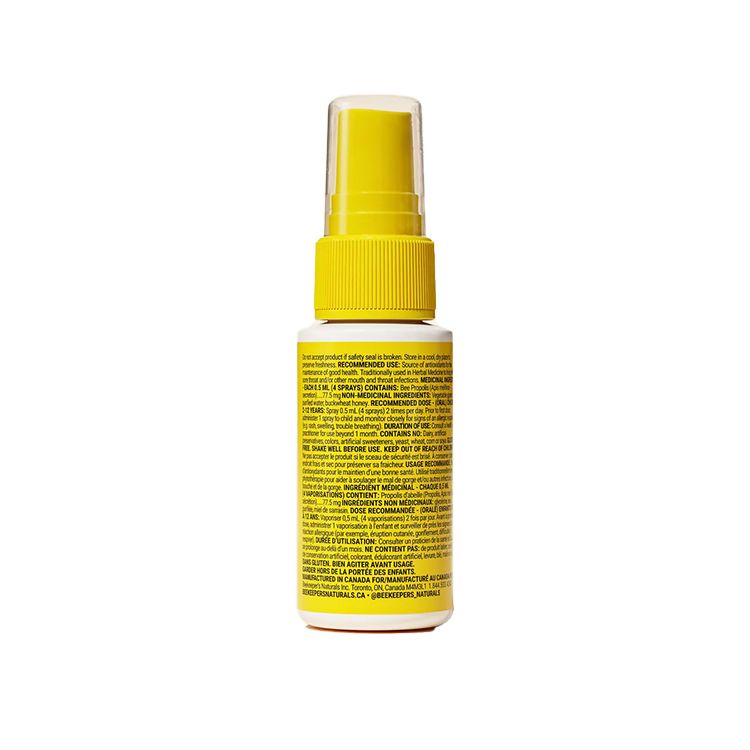
Children 2-12 years: 4 sprays (0.5ml) 2 time(s) per day
Ingredients
Bee Propolis Extract, Raw Buckwheat Honey, Non GMO vegetable glycerin & Purified Water
Description
A kid-friendly duo that's naturally tough on germs but soothing on sore throats. Straight from the hive, propolis helps the immune system fight off tough bugs, while naturally antiviral buckwheat honey delivers a dose of cold-crushing antioxidants. Runny noses have finally met their match.
Frequently Asked Questions
What is Beekeeper's Naturals Propolis Throat Relief for Kids, and what does it contain?
Beekeeper's Naturals Propolis Throat Relief for Kids is a 30 mL alcohol-free throat spray specifically formulated for children aged 2 to 12, combining two bee-derived ingredients with natural antimicrobial properties: propolis extract and buckwheat honey. The formula contains propolis extract from beehives in remote Canadian apiaries, non-GMO plant glycerin as the carrier, buckwheat honey, and purified water. It is sugar-free and alcohol-free, making it appropriate for children who cannot tolerate alcohol-based products or added sugar. Propolis is a resinous substance produced by bees from plant resins mixed with beeswax and bee enzymes, used to seal and protect the hive from microbial threats. Beekeeper's describes propolis as the immune system of the hive — it contains over 300 beneficial compounds including polyphenols, flavonoids, vitamins, and minerals. Buckwheat honey is a darker variety with documented higher antioxidant activity than lighter honeys, and research has shown it to be effective for cough relief in children in comparison-controlled studies. The product holds an NPN (Natural Product Number) from Health Canada.
How does propolis support immune function and throat health in children?
Propolis has been studied for its antimicrobial, anti-inflammatory, and immunomodulatory properties. The primary bioactive compounds are flavonoids and polyphenols — particularly pinocembrin, quercetin, caffeic acid phenethyl ester (CAPE), and galangin — which have documented activity against multiple bacteria and viruses. In the throat specifically, propolis has been shown to inhibit Streptococcus mutans and other oral pathogens, and laboratory studies have demonstrated antiviral activity against rhinovirus, influenza, and herpes simplex virus. CAPE has anti-inflammatory properties that may reduce mucosal irritation, potentially explaining its use for sore throat and throat irritation. Buckwheat honey contributes additional antioxidant and antimicrobial activity through its higher polyphenol content and hydrogen peroxide-generating enzyme glucose oxidase, which is preserved in raw honey. Both propolis and buckwheat honey act through multiple complementary pathways rather than a single mechanism, which may reduce the likelihood of pathogen resistance compared to single-agent antimicrobials. These mechanisms support immune defense at the throat mucosal surface, which is a primary entry point for respiratory pathogens.
How should children's propolis throat spray be used, and what precautions apply?
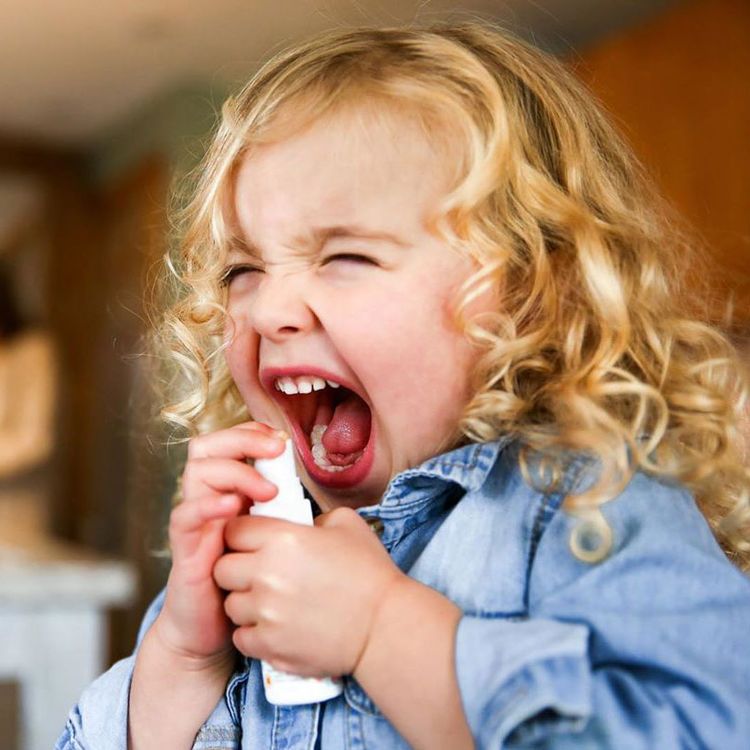
The recommended use for children aged 2 to 12 is 4 sprays onto the tongue, twice daily. On first use, begin with one spray under the tongue and wait to confirm there is no allergic reaction before proceeding to the full dose — this precaution is standard for any bee-derived product. The glycerin and honey base makes it palatable for young children, and the pump spray format allows convenient and mess-free administration by parents or caregivers. Children with known allergies to bee products, honey, or propolis should not use this product. The spray can be used at the onset of throat discomfort and during periods of frequent pathogen exposure such as school cold and flu season. As propolis contains over 300 compounds from various plant resins, individuals with known pollen or plant resin allergies — particularly balsam of Peru sensitivity — should consult a healthcare provider before first use.
How does Beekeeper's Kids Propolis Throat Spray differ from other children's throat products?
Most children's sore throat products available in pharmacies are either topical anesthetics (benzocaine lozenges), demulcents (glycerin or pectin syrups), or cough suppressants (dextromethorphan), none of which act directly against the infectious agents causing the throat irritation. Beekeeper's Propolis for Kids is designed to address the microbial cause directly through propolis's documented antimicrobial polyphenols and the antioxidant activity of buckwheat honey. The combination of propolis with buckwheat honey specifically is differentiated from products using lighter honey varieties, which have substantially lower antioxidant and peroxide-generating capacity. The formulation is alcohol-free and sugar-free — two attributes that matter in a children's daily-use product, since sugar contributes to dental caries and alcohol is not appropriate for children. Beekeeper's Naturals holds B Corp certification and tests all products for agricultural pesticides and heavy metals, a level of third-party verification beyond what most children's supplement brands apply. The remote-apiary sourcing of propolis minimizes contaminant exposure from agricultural environments near conventional beehives.
What is Beekeeper's Naturals and are its products safe?
Beekeeper's Naturals is a Canadian natural health brand founded in Toronto in 2014, specializing in bee-derived supplements including 95% propolis extract, royal jelly, and raw bee pollen. The brand is a Certified B Corporation and partners with the University of California Davis Honey Bee Research Facility for science-based product development. All formulas are third-party tested for pesticides and heavy metals, free from artificial colours, preservatives, and GMOs, and sourced from remote small-scale apiaries in Canada, Europe, and South America.
How is Beekeeper's Naturals different from other honey and supplement brands?
Beekeeper's Naturals' core differentiator is potency and traceability: its flagship propolis spray uses 95% propolis extract -- most commercial propolis products use 10-15% -- sustainably hand-harvested from remote apiaries. The brand is one of a small number of Canadian bee-product companies to hold B Corp certification and commission third-party pesticide and heavy metal testing across its full product line.
The information provided above is for reference purposes only and has not been reviewed or approved by Health Canada. It does not constitute medical advice and should not replace consultation with a qualified healthcare professional.
Caution
Prior to first dose, administer 1 spray to child and monitor closely for signs of an allergic response (e.g. Rash, swelling, trouble breathing).
Disclaimer
You should not use the information or services on this Site to diagnose or treat any health issues or for prescription of any medication or other treatment.
Always check the product label or packaging prior to using any product. If there are discrepancies, customers should follow the information provided on the product label or packaging.
Beekeeper's, Propolis Throat Relief for Kids, 30 ml
Size
30
ml
UPC
628055142188
Best Before
04/2029
38 people have viewed this item in the last 7 days
$15.99
Quantity
Not enough inventory in stock
Purchase limit exceeded
In-Store Purchases
In stock at LIFEPLUS Natural Health
#1825 - 4720 Mcclelland Rd, Richmond, BC
Free in-store pickup available
Ready by
Tomorrow, Oct 5
⏱️
Shipping Options
Available to ship
Estimate Ship Date
Tomorrow, Oct 5
⏱️
Metro Vancouver
Free Shipping Over $69
Within Canada
Free Shipping Over $99
United States
Mainland China
Starting from $9